
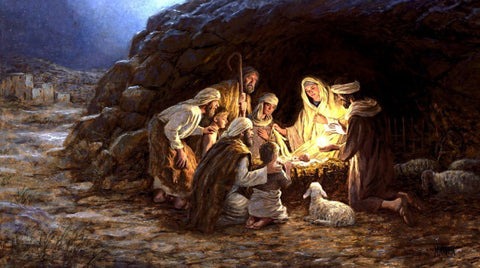
There is a novel that was written approximately two hundred years after the birth of Christ titled The Protoevangelium of James. It is good to learn about this novel as we are celebrating the Christmas season. Of course James, the brother of Jesus, cannot be the author of this novel; in those days many wrote books claiming famous people as the authors. The author of this novel was likely not a Jew and did not know much about the geography of Palestine. For instance, he described the road between Jerusalem and Bethlehem as a desert when in reality it was rich farmland.
2015
17 posts
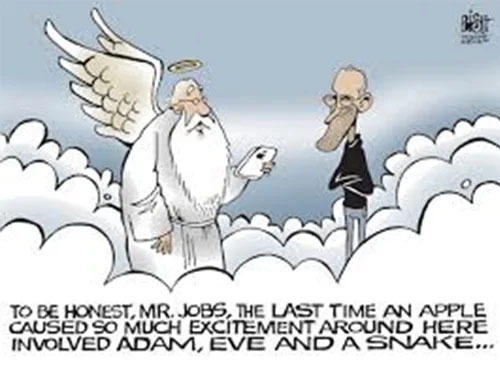
In August 2015, as I was having a physical therapy session, the physical therapist said that heaven will be boring. I agreed that IF her imagination of heaven is like having wings and floating on clouds and attending a church service that lasts forever, then heaven will be mind- numbingly boring. Instead I told her that heaven is enjoyment of deep intimacy with Jesus and our heavenly Father. Then I asked her to go back and remember how she felt when she first fell in love with the man who became her husband, and she responded right away by saying “ecstasy.” So I told her that heaven is a sense of ecstasy, of deep joy experienced eternally as a result of deep intimacy with God. From then on, whenever we referred to heaven the word “ecstasy” surfaced.
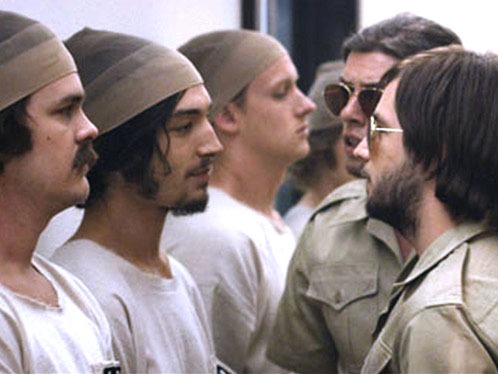
In the Spring of 2007, I heard an interview on National Public Radio with Dr. Philip Zimbardo, who became famous as a result of the 1971 experiment he conducted known as the “Stanford Prison Experiment.” I had heard a few things about that experiment but never knew any of the details.
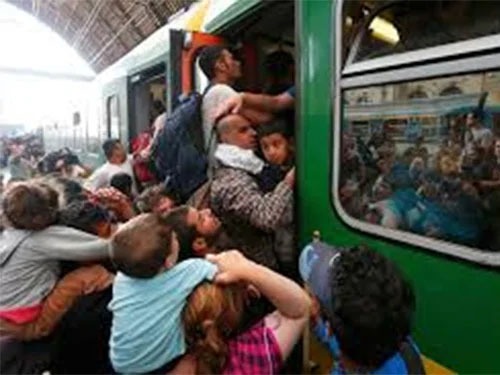
In early September 2015, TV channels reported the huge numbers of refugees, mainly from Syria, heading to Europe. On Sunday morning, September 6, 2015, I was doing my morning exercises while watching the TV reports about the refugees and wondered: Lord, what can I do? It was overwhelming.
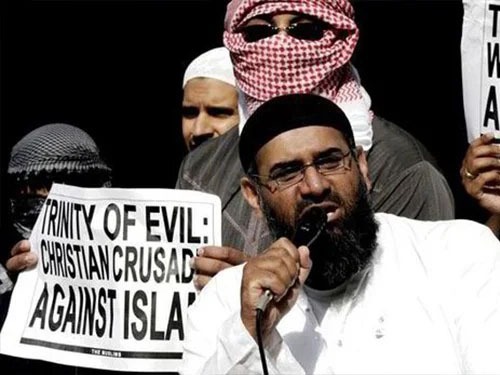
In the previous two blogs Colin Chapman addressed seven important questions that appeared in my previous two blogs and in this blog he has addressed the final three questions 8, 9 and 10.
In the previous blog Colin Chapman addressed the first three important questions:
1. What do we mean by ‘Political Islam’ and how does it differ from other kinds of Islam?
2. Is Islam essentially more political than Christianity?
3. Why has political Islam become so significant in recent years?
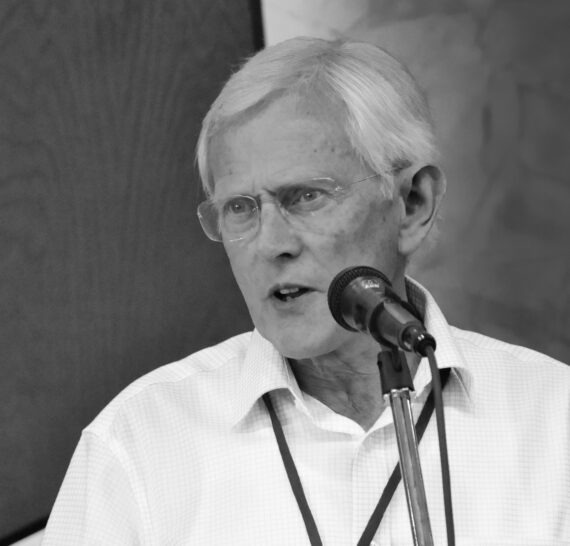
A presentation by Colin Chapman took place at a meeting in London, England, on June 16, 2015, when the main speaker was David Garrison, author of A Wind in the House of Islam‘. Colin Chapman has worked in Egypt and Lebanon for 18 years in three different spells, and is now enjoying semi-retirement in Cambridge, England. In his last full-time post he was teaching Islamic Studies at the Near East School of Theology in Beirut, Lebanon, and he is at present a visiting professor in the master’s program at the Arab Baptist Theological Seminary in Beirut. His books include Cross and Crescent: Responding to the Challenges of Islam (IVP) and Whose Promised Land? (Lion Hudson UK, with a new edition to be published in October this year).
Recently I taught a course on “Islam and Current Events” at Denver Seminary. I taught the intensive course the week of June 22-26, 2015 – seven hours a day, each day. On the fourth day, one of my students came to class in the morning and he was obviously distraught. When I asked him what was wrong, he told me that the previous night he had watched an ISIL video where men were murdered; not through decapitation, but through other disgusting ways. I asked him to send me the link, and I watched it. This was the first time that I watched an ISIL video where the execution was fully shown and the ugly segment was not cut out by the U.S. media. The following night I couldn’t sleep. It was disgusting and I could only conclude that it was something driven by the demonic.
Pamela Geller, Robert Spencer, Geert Wilders, and others, are inadvertently the spearheads of Islamism in the US and Europe! This may sound like a bit of a radical statement, but perhaps it really isn’t.

In the previous blog, I shared with you the first six points in my Trust List, and in this blog I want to share with you my total list. As you see, my list is:
-
Incomplete.
-
Based on some texts from the Scriptures that I have memorized and meditated on.
-
Every point includes a statement of trust.
-
Some points include prayer for the world, others include prayer for the body of Christ or the local church, still others could be personal prayers.